
Official Release: March 26, 2026
The aftermarket runs on data. In 2026, that foundation changes.
After a one-year industry review (April 2025–March 2026), ACES® 5.0 and PIES® 8.0 will officially launch—alongside updated schemas for:
- VCdb (Vehicle Configuration Database)
- Qdb (Quality Database)
- PCdb (Product Classification Database)
- PAdb (Product Attribute Database)
- Brand Table
This is more than a version update.
It’s a structural modernization of how aftermarket data is validated, distributed, and trusted.
The real question: Will your systems be ready?
What’s Changing in 2026
Structural Improvements
- Enhanced XML schema architecture
- Improved positional data accuracy
- Better multi-package support
Digital & Global Readiness
- Expanded digital asset handling
- Multilingual qualifiers
- Updated database schemas
Data Integrity Enhancements
- File hashing for verification
- Stronger validation controls
The goal: modernize cataloging, reduce errors, and future-proof compliance.
Why This Matters Now
The aftermarket is growing, digitizing, and becoming more competitive. Industry research continues to show that digitization is reshaping the ecosystem .
Standards are evolving because:
- eCommerce expectations are higher
- Global distribution is expanding
- Data errors are more expensive
- Trading partners demand cleaner files
ACES and PIES are no longer back-office formats.
They are revenue infrastructure.
Digital Assets: No Longer Optional
PIES 8.0 strengthens digital asset structuring.
That impacts:
- Images
- Installation guides
- Compliance documents
- Marketing content
Poorly structured assets lead to:
- Marketplace rejections
- Delays in syndication
- Lower conversion rates
The challenge isn’t creating assets.
It’s organizing and validating them correctly.
How PDM Helps
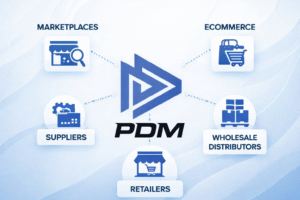
PDM centralizes product data and digital assets so they flow cleanly into ACES and PIES outputs—without manual rework.
If standards are getting more sophisticated, your data platform must match that sophistication.
Multilingual Qualifiers: Built for a Global Market
Multilingual support reflects a simple reality: the aftermarket is global.
This enables:
- Accurate cross-border distribution
- Improved regional searchability
- Fewer misinterpretation errors
- Scalable international growth
Translation alone isn’t enough.
Structured multilingual data is the new expectation.
File Hashing: Verified & Trusted
File hashing adds integrity verification.
Why it matters:
- Confirms files haven’t been altered
- Reduces corruption risks
- Strengthens compliance confidence
- Builds trust with trading partners
In a data-driven supply chain, verification is leverage.
Updated Databases = Higher Standards
Schema changes across VCdb, Qdb, PCdb, PAdb, and the Brand Table reinforce one reality:
Data governance is no longer optional.
If your process relies on:
- Spreadsheets
- Manual exports
- Fragmented systems
The transition will expose inefficiencies.
Modern standards require modern infrastructure.
The Risk of Waiting
New updates will be here before you know it.
Schema updates impact:
- ERP integrations
- Internal validation workflows
- Marketplace compatibility
- Distributor relationships
It is highly recommended that manufacturers engage their software providers now—not after launch.
Reactive compliance is expensive.
Strategic preparation creates an advantage.
Compliance vs. Competitive Advantage
Meeting ACES/PIES standards is baseline.
Operational excellence is differentiation.
With PDM, manufacturers can:
- Centralize product data
- Validate against current schemas
- Reduce manual rework
- Accelerate time to market
- Improve distributor acceptance
Compliance should make you faster—not slower.
Final Takeaway
ACES 5.0 and PIES 8.0 signal:
- Stronger structure
- Greater global alignment
- Higher data integrity
- Increased supply chain expectations
The aftermarket is digitizing rapidly and standards are evolving to match.
This isn’t just a technical update. It’s a strategic moment.
The brands that treat it that way will lead.